Platform · IxAct
SSF & CAEP-based containment and governance
SSF & CAEP-based containment and governance.
Containment becomes an action instead of a ticket: the grant ends in every connected system in seconds, with a record of each.
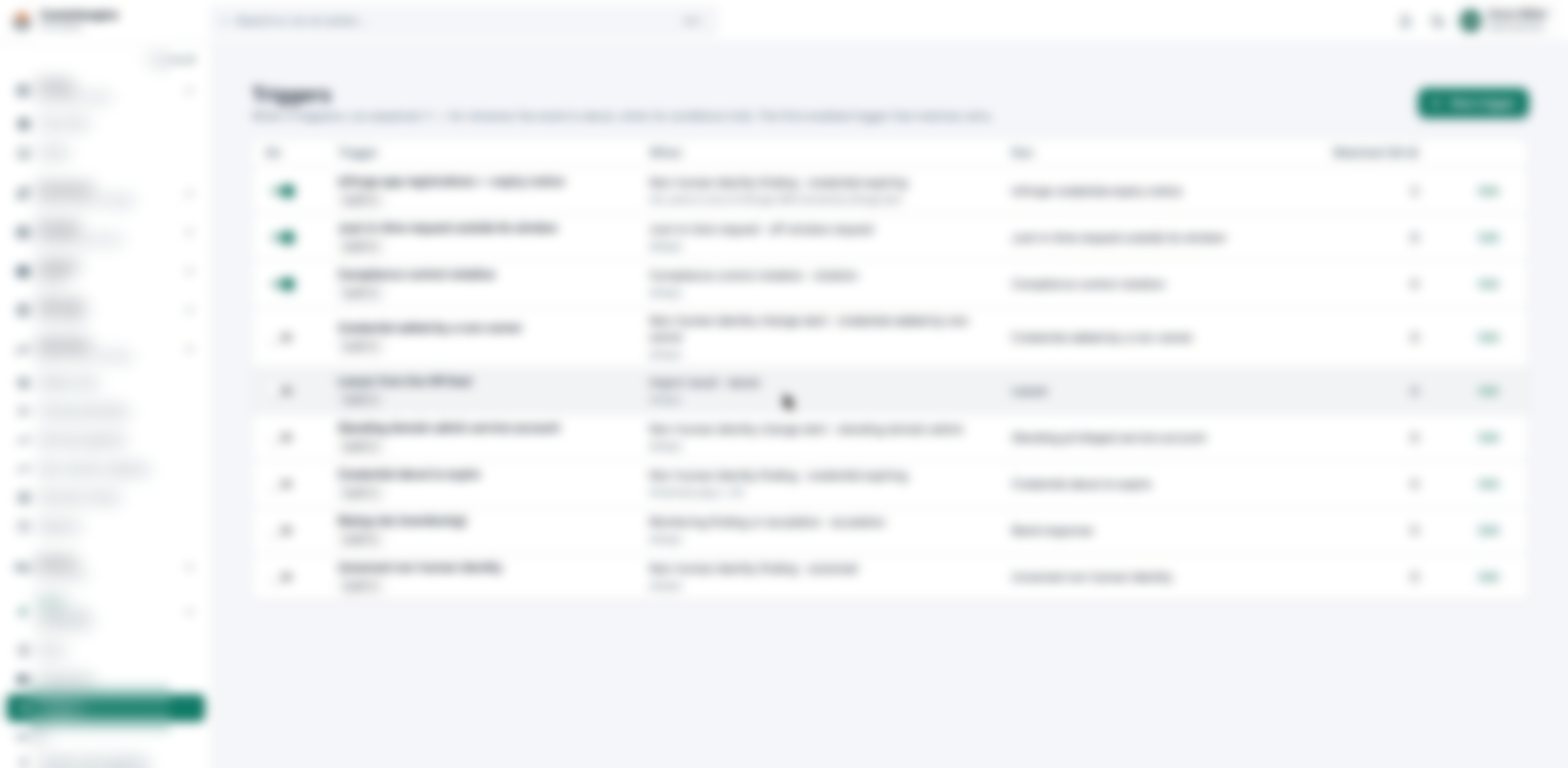
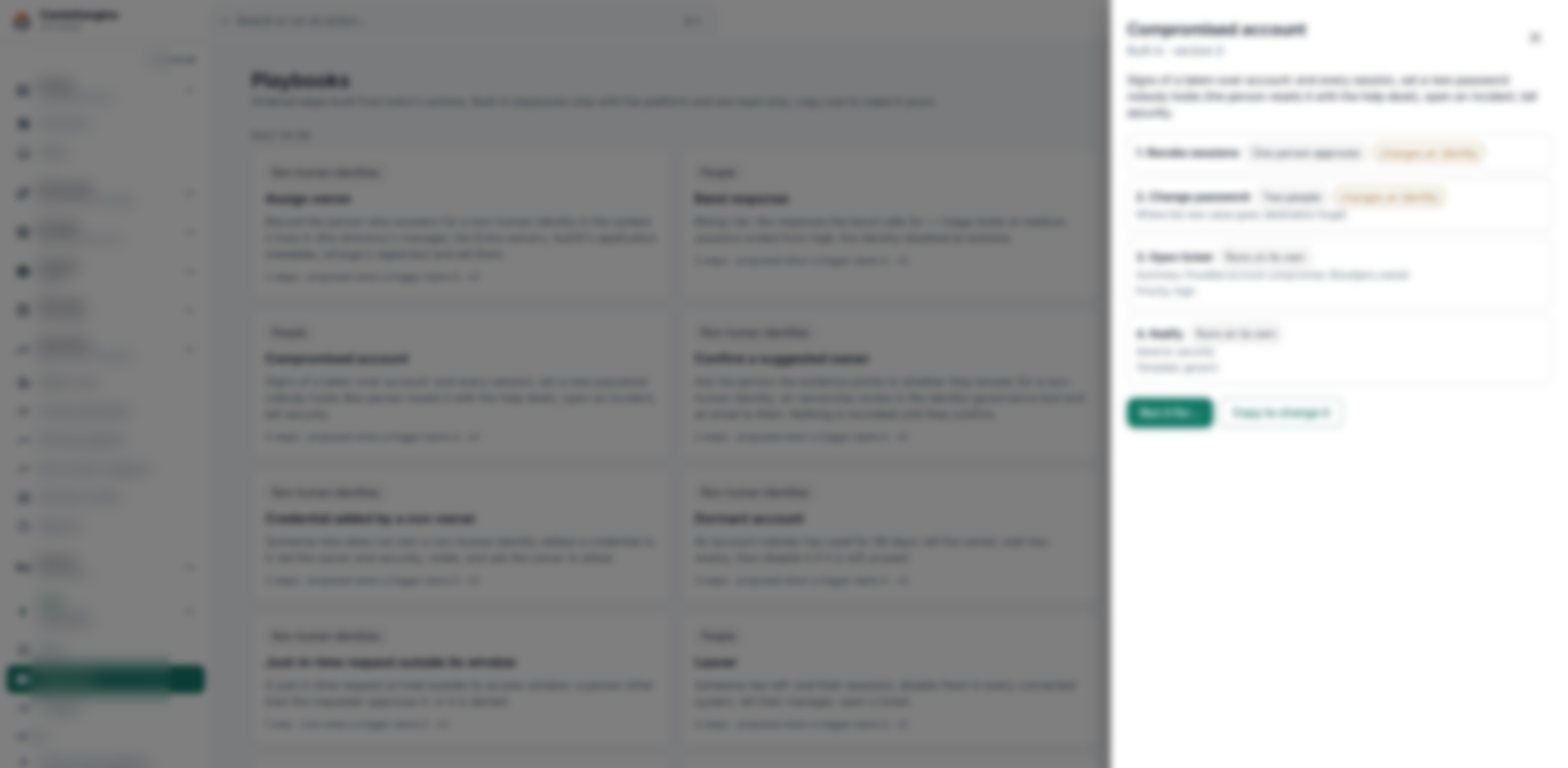
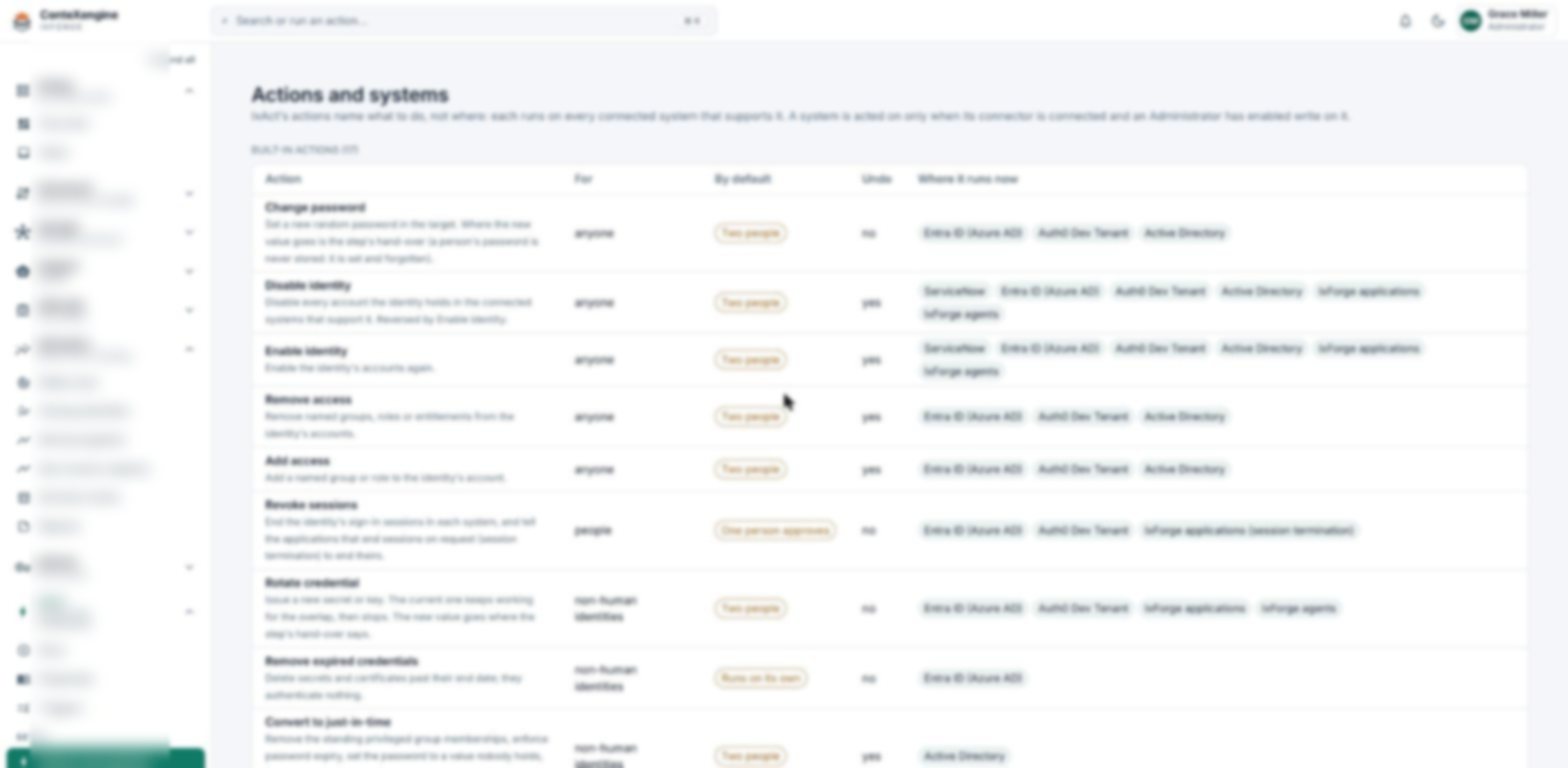
Three things, every day.
Seventeen built-in actions, among them disable, revoke sessions, remove access, rotate credentials and convert to just-in-time, on every connected system that supports them.
Response actions run with the approvals you set, and every run is recorded.
Shared signals carry the outcome to your identity providers and applications, so containment doesn’t wait for a token to expire.
From signal to decision.
See it decide.
Questions we get asked.
What are SSF and ?
Open standards for sharing security events between identity providers and applications. IxAct transmits the decision outcome through them.
Can actions run automatically?
Yes, where you pre-approve them; otherwise they wait for one or two approvers. Every run is recorded.
What systems can it act on?
Any connected system where an administrator has enabled write-back: identity providers, directories, vaults, ticketing and cloud.
How is recovery handled?
As a governed human step. Once a step-up is approved, the identity resumes, often with reduced scope.